The right way to judge sauna wood comparison is by how it will feel, fit, and hold up after the first month. Heat performance, electrical planning, materials, maintenance, and actual user habits matter more than showroom language.
A friend of mine, Jeff, builds custom furniture out of a shop in Sebastopol, California. Last fall he decided to put a sauna in his backyard. He had easy access to clear all-heart redwood through a local mill, so the wood choice was obvious. What wasn’t obvious: the 14-foot electrical run from his sub-panel to the pad site, the fact that his soil drains like a bathtub, and the three weeks he spent arguing with his county about whether a 64-square-foot detached structure needed a building permit. (It didn’t. The 240V circuit absolutely did.) His sauna is gorgeous now. But the project taught him something most buyers learn the hard way: choosing the wood is the easy part.
Redwood is a genuinely excellent sauna material. It’s also an expensive one, and the total cost of a redwood sauna project has less to do with the wood itself than most people think. Here’s the full breakdown: what redwood actually gives you, what the install really involves, what the research says about regular sauna use, and what the all-in number looks like.
Why Redwood, and Why It Costs More
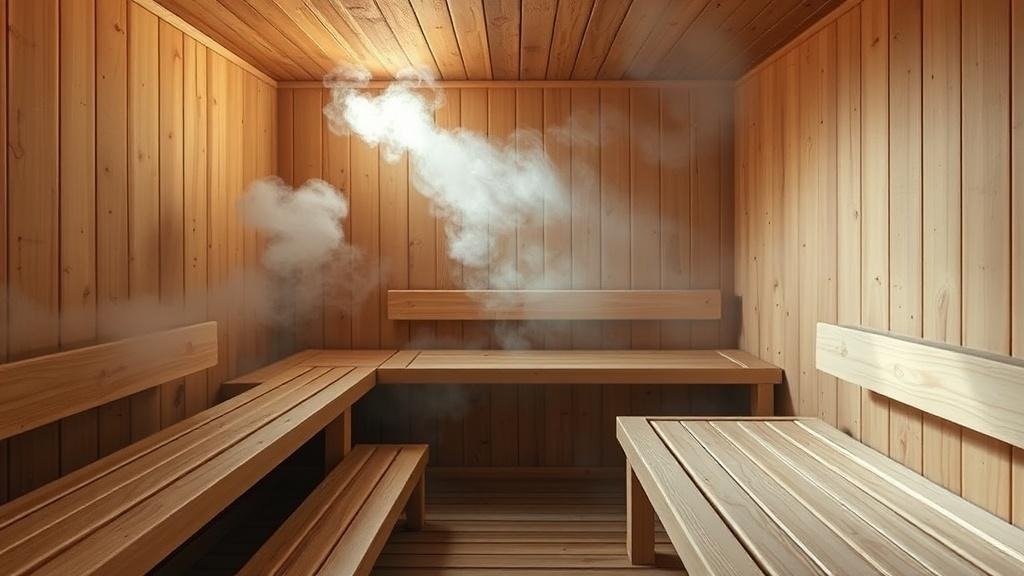
Redwood’s reputation in outdoor building comes from tight-grain heartwood that resists rot, insects, and moisture without chemical treatment. For a sauna, those properties matter. The interior of a sauna swings between ambient temperature and 195°F, often with steam. The exterior, if it’s an outdoor build, takes rain, UV, and freeze-thaw. Redwood handles both sides of that equation well.
The tradeoffs are real, though. Redwood is softer than western red cedar (the default sauna wood for most kit manufacturers), which means it dents more easily on bench surfaces. It’s also more expensive. Clear all-heart redwood runs a meaningful premium over construction-grade cedar, and availability outside the West Coast can be spotty. You’re typically looking at a 15 to 25 year exterior lifespan with light annual care (an exterior oil once a year, bench wipe-downs after each session).
The boring truth is that cedar, hemlock, thermo-aspen, and redwood all make perfectly good saunas. Redwood’s advantage is aesthetic and durability-related, not thermal. It won’t make the sauna hotter or hold heat meaningfully better. If you love the look of redwood and you can source it, it’s a premium choice that justifies itself over time. If you’re stretching the budget to afford it, put that money into a better heater instead.
The Spec Sheet Stuff That Actually Matters
Forget the marketing copy. Here’s what to check on any sauna product page before you commit.
Heater sizing. Match the heater to the cabin volume. A 6 kW heater is right for a small barrel (roughly 150 to 200 cubic feet). A 7.5 to 9 kW unit handles a standard cabin. Undersized heaters run constantly and burn out early. Oversized heaters cycle aggressively and waste electricity. The manufacturer’s sizing chart is more trustworthy than forum advice.
Joinery. Pre-cut tongue-and-groove cladding is the standard for any sauna worth buying. Cheap kits use butt joints with felt strips. Those builds leak heat at the seams and look weathered within two seasons.
Door hardware and glass. Tempered glass doors are standard on cabin saunas. Check the seal quality. A bad door seal is the number one source of heat loss in an otherwise solid build.
Wood grade. “Redwood” on a spec sheet can mean anything from sapwood mixed-grade boards to clear all-heart heartwood. The difference in rot resistance and appearance is enormous. If the listing doesn’t specify the grade, ask. If they can’t answer, walk.
What the Research Actually Shows
Sauna research gets oversold in the wellness space, so here are the specific numbers.
The most-cited study is Laukkanen et al. (2015), published in JAMA Internal Medicine. That team followed 2,315 middle-aged Finnish men over 20 years and found a dose-response relationship between sauna frequency and cardiovascular mortality. Men who used a sauna 4 to 7 times per week had roughly half the cardiovascular mortality of men who used it once a week. That’s a striking finding, but it comes with the usual cohort-study caveats: these were Finnish men with a lifelong sauna habit, and the study can’t isolate causation from correlation with other lifestyle factors.
A 2018 follow-up from the same group, published in BMC Medicine, reported lower dementia incidence at the highest sauna frequencies. The proposed mechanisms include heat acclimation, improved endothelial function, and a heart-rate response that mimics moderate-intensity exercise (think a brisk walk, sustained for 15 to 20 minutes).
For a home user, a reasonable starting protocol is 20-minute sessions at 170°F to 195°F, two to four times per week. Hydrate before and after. Step out if you feel lightheaded. That’s not a prescription; it’s where most of the observational data clusters.
Installation: The Part Everyone Underestimates
Jeff’s experience is typical. People shop for weeks comparing wood species and heater brands, then spend about 15 minutes thinking about the pad and the electrical run. That’s backwards.
The pad. A 4-inch compacted gravel pad with proper drainage works fine for a barrel unit on flat, well-drained ground. A cabin sauna in a cold or wet climate belongs on a 4-inch reinforced concrete slab, which runs roughly $4 to $7 per square foot installed. A pad that settles after the sauna is sitting on it is a nightmare to fix.
The electrical. A traditional sauna heater pulls 4.5 to 9 kW on a dedicated 240V circuit at 30 to 50 amps. This is not optional DIY. A licensed electrician sizes the breaker, runs the circuit, and pulls the permit. Cutting corners on high-amperage electrical work is how garage fires start.
Ventilation. An outdoor sauna needs a fresh-air intake low on the wall (under or near the heater) and an adjustable exhaust vent on the opposite wall near the ceiling. Indoor builds need a passive vent to the outside or a properly sized exhaust fan. Skip this and you get stale air and uneven heat.
Permitting. Many counties exempt detached structures under 200 square feet from a building permit. The electrical permit, however, is almost always required because of the 240V circuit. Call your local building department before ordering anything. A five-minute phone call can save you weeks of headache.
The All-In Cost, Honestly
The sticker price on a sauna kit is like the base price on a truck. It’s a starting point, not a destination.
On the sauna side: entry-level barrel kits start around $2,490. A mid-tier cabin with a quality heater runs $6,000 to $10,000. Premium builds (panoramic glass-front, thermo-aspen or redwood) land at $12,000 to $16,980. Then add $400 to $900 for a gravel pad (or $1,200 to $2,400 for concrete), and $600 to $1,800 for the 240V electrical run and permit.
If you’re also considering cold plunge gear: a residential insulated tub with an integrated chiller runs $4,500 to $7,500. Commercial-grade stainless builds with full filtration hit $9,000 to $14,000. Stock-tank DIY setups are $400 to $900 but require manual ice, which gets old fast (ask anyone who’s hauled bags from the gas station in July).
A well-built outdoor sauna doesn’t return dollar-for-dollar at resale, but appraisers in the Northeast and Pacific Northwest increasingly treat it as a selling feature. It’s comparable to a hot tub in that respect, maybe slightly better because the maintenance burden is lower.
On the tax question: a residential sauna is rarely HSA or FSA eligible unless a clinician issues a Letter of Medical Necessity for a documented condition. That’s patient-specific. Talk to your tax advisor before assuming a purchase qualifies.
Comparing Your Options (Quick and Dirty)
An outdoor barrel sauna heats in 25 to 35 minutes and fits on a small pad. An indoor cabin heats faster but takes living space and requires venting to the outside. An infrared cabin runs at lower temperatures (120°F to 150°F), plugs into a standard outlet, and produces a different physiological response than a traditional Finnish sauna. Each is a legitimate choice depending on space, climate, and what kind of heat experience you want.
The fuller redwood sauna resource we keep coming back to is this resource, which walks through specific model lineups, pricing tiers, and installation details for a home build. Worth bookmarking before you start requesting quotes.
My one genuinely opinionated take: if you live somewhere with real winters and you’re going to use this thing three or four times a week, spend the money on a concrete pad and a properly sized heater before you upgrade the wood species. A cedar sauna on a solid pad with a great heater will outperform a redwood sauna on settled gravel with a cheap heater every single time.
See also: Trusted SEO Services 120934 for Business Growth
FAQs
How quickly does a redwood sauna heat up?
A 6 kW barrel sauna reaches 170°F in 25 to 35 minutes. A 7.5 kW cabin sauna lands at the same temperature in 30 to 45 minutes. Cold-plunge chillers pull a freshly filled tub from tap temperature to 45°F in 3 to 8 hours depending on chiller size and starting water temperature.
How long should a typical sauna session last?
Most adults settle between 12 and 20 minutes at 170°F to 195°F. For cold plunge, 2 to 5 minutes at 40°F to 55°F. Build up gradually if either practice is new to you.
Can I install a redwood sauna on a deck?
Some smaller barrel units can sit on reinforced decks if the framing supports the loaded weight (often 600 to 1,200 lb). Most cabin units belong on a ground-level pad. Confirm load capacity with a structural engineer or contractor before placing any unit on existing decking.
How often does a redwood sauna need maintenance?
Wipe down benches after each session and oil the exterior wood once a year. On cold plunges, replace filter cartridges every 6 to 12 weeks, run ozone or UV sanitation on schedule, and drain and refill per the manufacturer’s recommended interval.
Will my electric bill spike?
A 6 kW sauna heater running for one hour costs roughly $0.60 to $1.20 at typical US residential rates. Three 20-minute sessions per week add about $4 to $8 per month. A 1/2 HP cold-plunge chiller in steady state pulls about 350 to 450 watts and adds $8 to $15 monthly in most climates.
Is redwood better than cedar for a sauna?
Redwood offers superior rot resistance and a distinctive grain, but it’s softer and more expensive. Thermally, they perform similarly. The choice is primarily aesthetic and budgetary.
Do I need a permit for a backyard sauna?
Many jurisdictions exempt detached structures under 200 square feet from a building permit. The 240V electrical permit is almost always required. Call your local building department before ordering.
Disclaimer. This article is general consumer information, not medical advice. Heat and cold therapies carry real cardiovascular load. Anyone with arrhythmias, uncontrolled hypertension, Raynaud’s phenomenon, recent cardiac events, or who is pregnant should consult a physician before starting any new sauna or cold-plunge routine.
Any 240V electrical work should be completed by a licensed electrician under the appropriate local permit.
HSA and FSA reimbursement on wellness equipment is patient-specific and depends on a Letter of Medical Necessity from a clinician. Talk to your tax advisor before assuming a purchase qualifies.